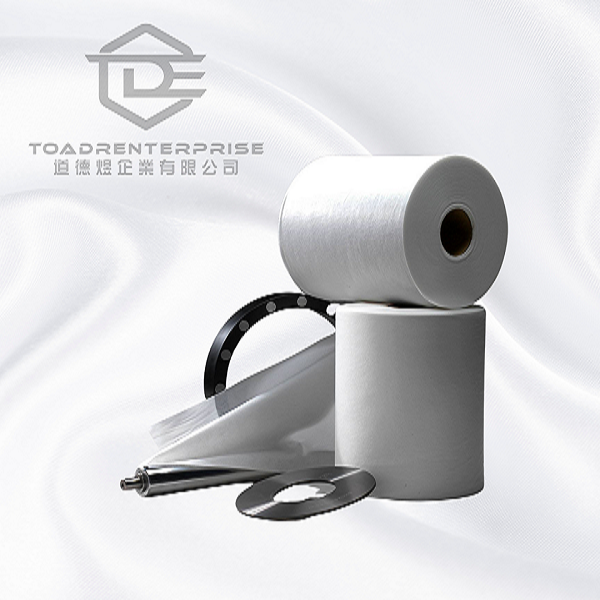
Industrial Wipes: Does Your Choice Really Affect Precision Machining Quality?
The Hidden Variable Between Surface Cleanliness and Micron-Level Accuracy
By TOA DR Technical Team | Metalux® Industrial Wipes
In high-precision metal processing, competitive advantage is measured in microns (μm). Despite substantial investment in advanced machinery and premium tooling, manufacturers frequently encounter an unexpected problem:
"Processes remain unchanged. Materials are consistent. Yet yields deteriorate — and micro-scratches appear from nowhere."
At TOA DR, drawing on decades of experience manufacturing precision slitting equipment, we have identified where this problem originates. In most cases, it is not the machine design or the tooling. It lies in a factor almost everyone overlooks:
Surface cleanliness at the mating interface — and specifically, what you use to clean it.
I. The "Micro-Gasket Effect": An Invisible Precision Killer
When two precision-ground metal surfaces are clamped together, they should achieve near-perfect molecular contact. But any residual fiber or dust particle creates what is known as the "Micro-Gasket Effect."
Loss of Tolerance and Accuracy
A single 10μm particle trapped at the mounting interface acts as a microscopic shim. Under high clamping pressure, it causes asymmetric runout that amplifies dramatically at operating speed, leading to:
- Burr formation and dimensional deviation at slit edges.
- Accelerated and uneven tool wear — slashing tool life from six months to under three.
- Yield degradation that is difficult to trace with standard inspection methods.
The Real Origin of Surface Scratches
Residual particles containing metallic or hard contaminants can carbonize under high-friction heat, forming embedded hard spots. These act as invisible abrasives during operation — the true source of many "unexplained" micro-scratches on precision workpieces.
II. Are You Cleaning — or Just Redistributing Contamination?
The most common practice on the shop floor is wiping tooling and mold surfaces with shop rags or recycled cotton cloths. While this appears productive, it creates two critical failures at the micro level.
The Structural Failure of Cotton
Conventional cotton is composed of short staple fibers that break on contact with sharp edges or machined surfaces. Visible contaminants may be removed — but the lint left behind fills the same gaps, replacing one contaminant with another. You think you are cleaning. You are exchanging pollutants.
The Risk of Recycled Rags
Recycled rags are inconsistent in composition, often carrying chemical residues, oils, or metal shavings from previous use. This uncertainty in cleaning material leads directly to uncertainty in product quality.
Is it worth risking a high-value workpiece — or your supplier qualification — to save a negligible amount on cleaning supplies?
III. Metalux®: Cleanliness Defined by Equipment Manufacturers
TOA DR developed Metalux® Industrial Wipes not as a consumable vendor — but as precision machinery manufacturers who understand exactly what a qualified wipe must do to protect mechanical tolerances.
Continuous Filament Trapping Technology
Metalux® uses a specialized continuous-filament geometric structure — fundamentally different from cotton in how it handles contamination:
- Traditional cotton: Pushes dust across the surface. Particles escape at the edges, causing secondary contamination.
- Metalux®: Physically locks micro-particles deep within the fabric structure — ensuring zero surface residue after wiping.
- Continuous fibers do not break on sharp edges, eliminating secondary linting entirely.
IV. Wiping Material as a Quality Control Variable
In ISO or 5S management systems, if cleaning materials are inconsistent, standardization is impossible in practice. Here is how Metalux® compares to conventional alternatives:
| Metric | Shop Rags / Cotton | Metalux® Wipes | Impact on Production |
|---|---|---|---|
| Micro-Residue | High — short fibers break easily | Near zero — continuous filaments | Ensures assembly precision; eliminates runout |
| Dust Handling | Surface wiping; redistributes dust | Physical trapping; locks in particles | Improves yield; prevents scratching |
| Chemical Resistance | Degrades or bleeds with solvents | High resistance; no reaction | Protects precision coatings and plating |
| Standardization | Inconsistent; impossible to standardize | Controlled and stable | Standardizes processes; reduces costs |
V. Why Choose TOA DR's Metalux®?
We don't supply wipes. We deliver precision solutions.
Since 1972, TOA DR has manufactured precision slitting equipment. We understand the demands of each stage of the metalworking process. Metalux® was engineered from our perspective as machine builders — specifically for the metalworking floor — and rigorously validated in our R&D facilities.
Choosing the right cleaning material is not about housekeeping. It is about turning a neglected quality variable into a controllable competitive advantage.
Experience the Difference on Your Shop Floor
TOA DR believes in data and evidence. Contact our technical team today
to learn how Metalux® can optimize your production yield.
Request a technical consultation or sample.
Sales Inquiry: +886-2-2995-7607 | Email: sales@slitterline.com
#IndustrialWipes #PrecisionMachining #Metalux
Copyright © TOA DR Enterprise. All rights reserved. Please cite the source when reprinting.
Metalux® Industrial Wipes | TOA DR Enterprise Co., Ltd. | slitterline.com